Prepare for exams with your own course material.
Gather your readings, create notes for the key ideas, and make flashcards to test what you remember.
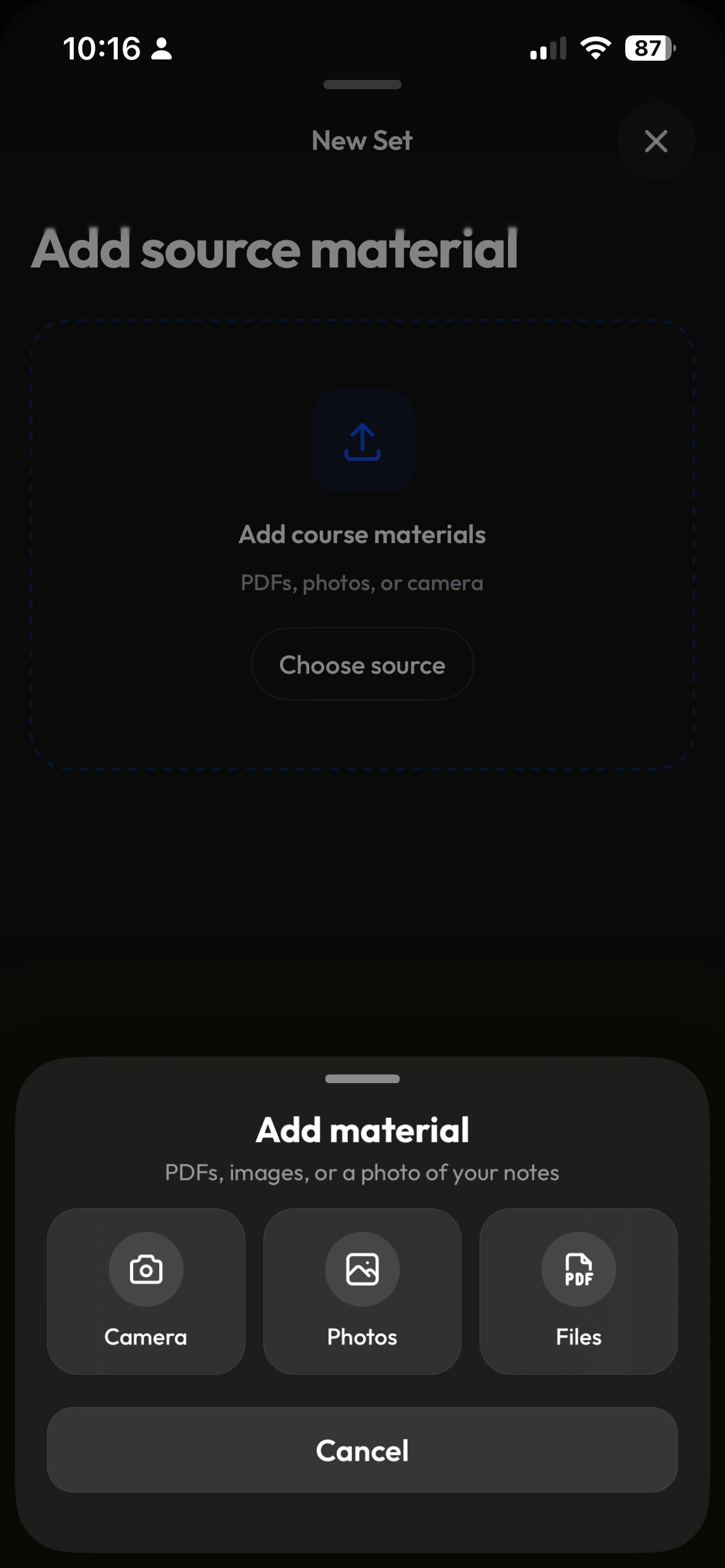
Start with the material your class is built on.
Use files, pasted content, existing notes, and course details as the foundation. A useful study guide should reflect your subject, not a random public set with a similar title.
- Use your own course material
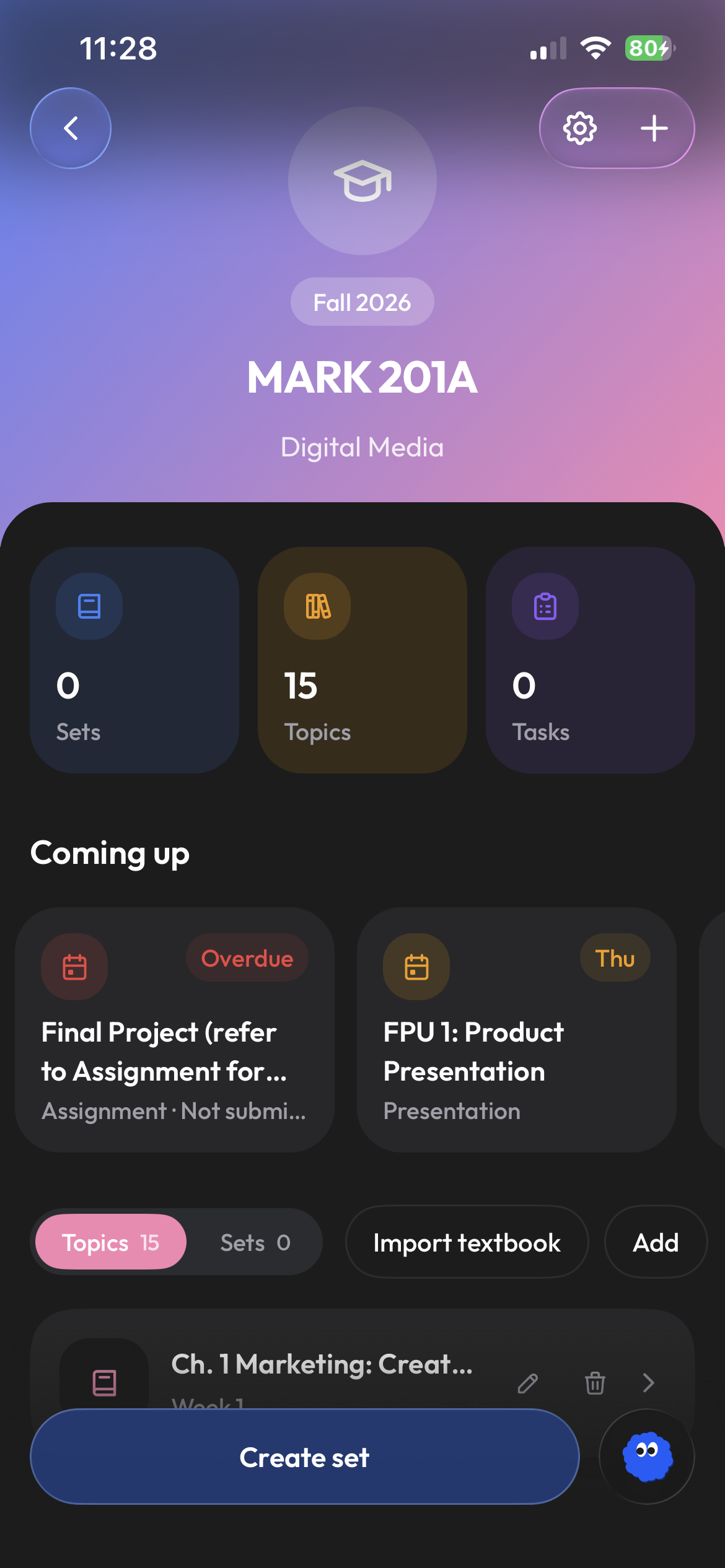
- Keep every resource under the right class
- Return to recent work without searching again
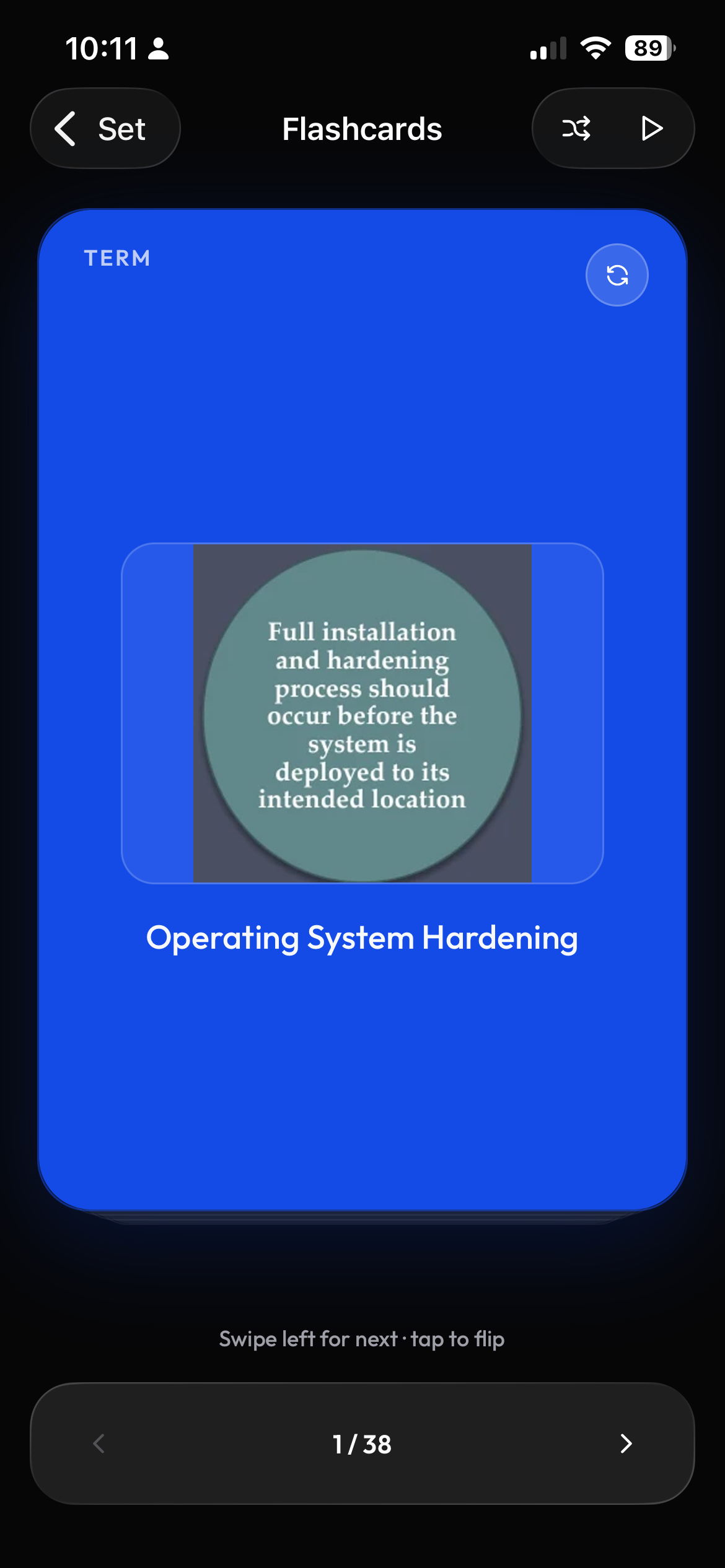
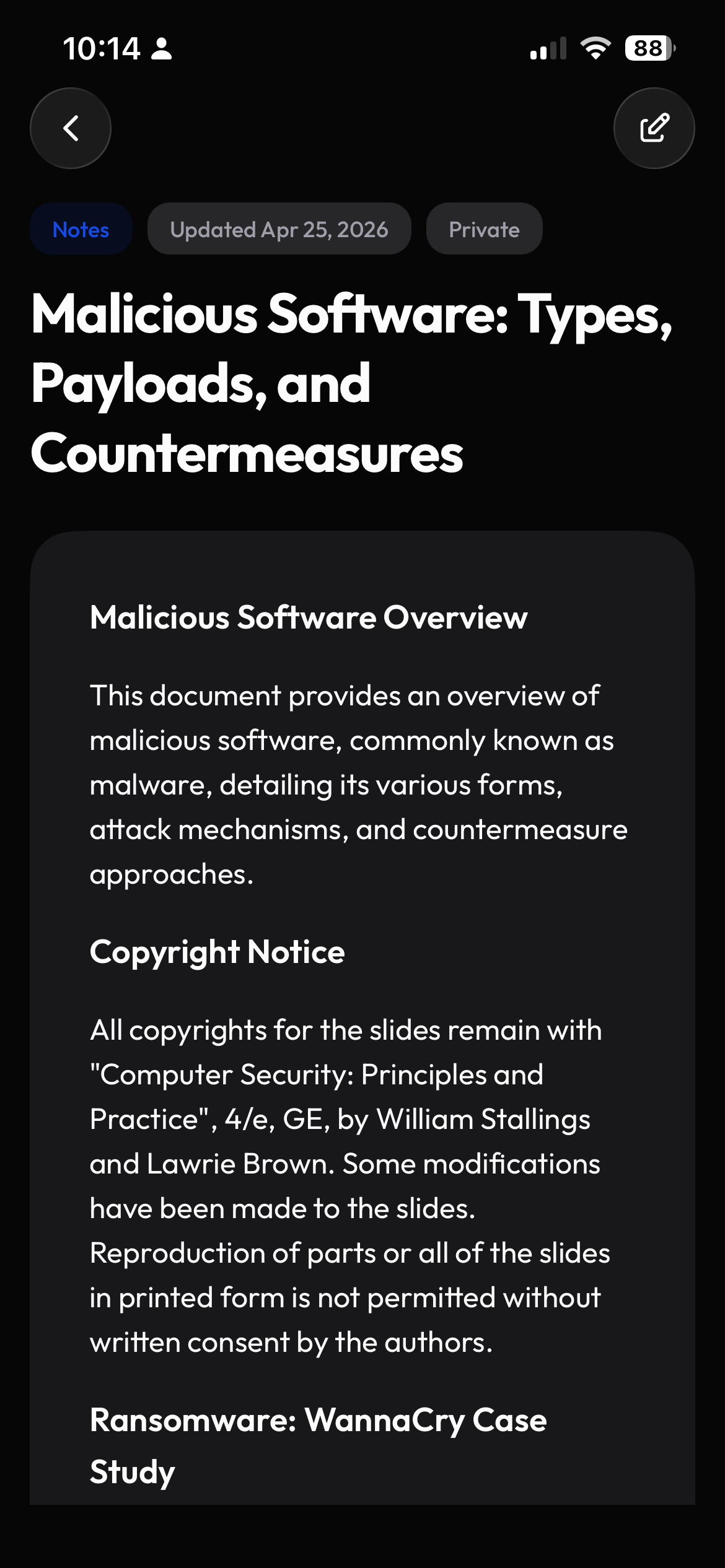
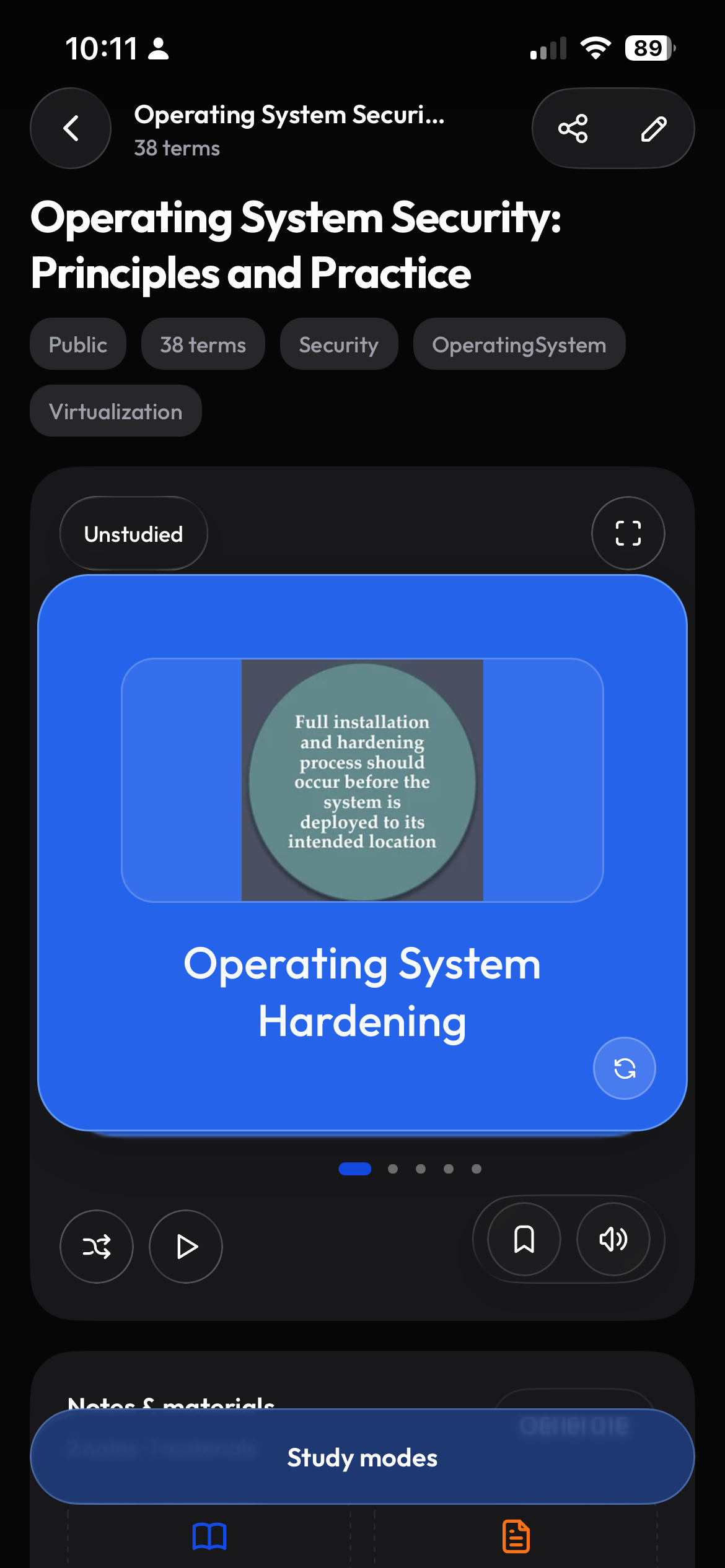
Use notes for the overview and cards for recall.
A study guide does not need to force every idea into one format. Keep structured notes for explanation, then use flashcards where active recall is the better tool.
- Structured notes for understanding
- Study sets for active recall
- Notes and flashcards organized by class

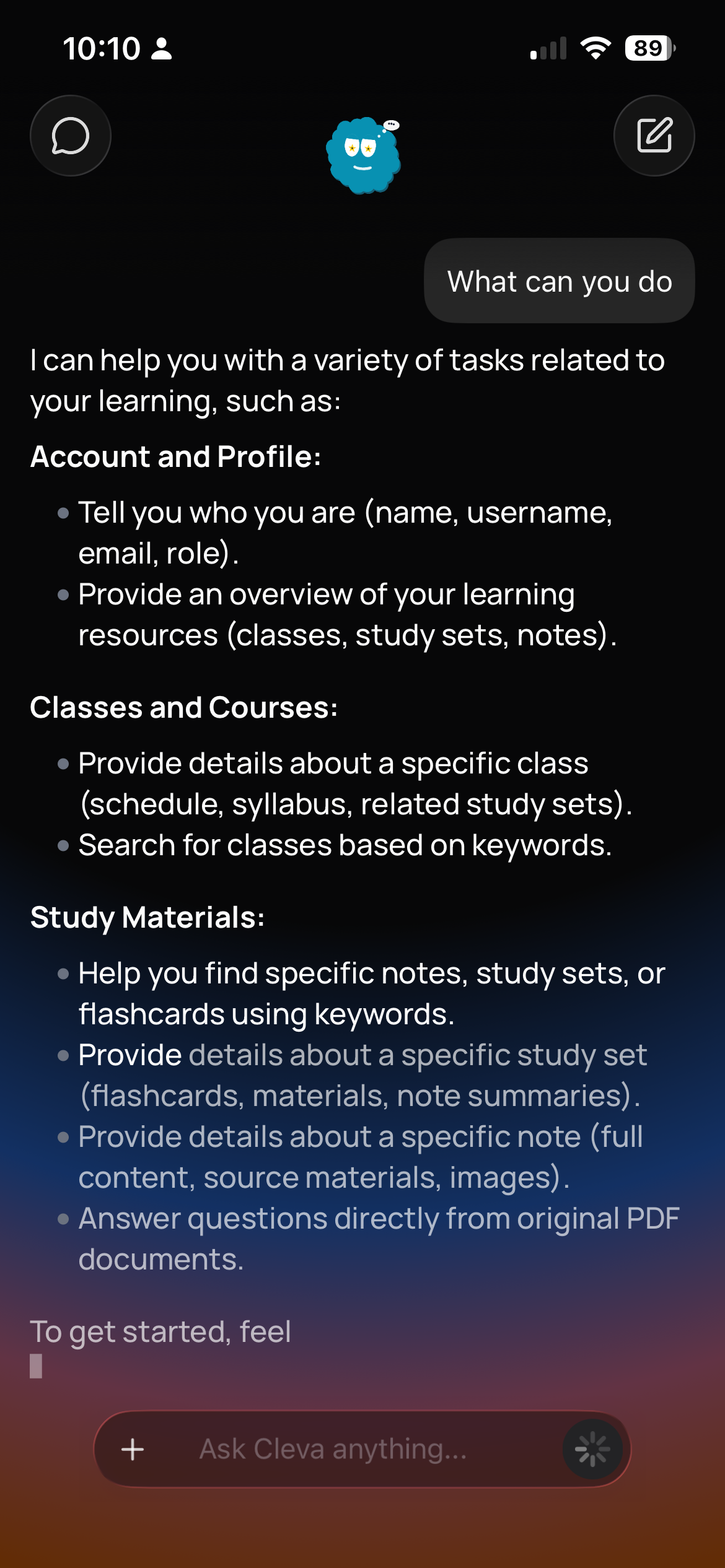
Ask for help without explaining the course again.
When a section still does not make sense, Cleva can help from inside the same school workspace. The conversation begins closer to the material you are reviewing.
- Clarify difficult course material
- Ask questions about your course files
- Choose what deserves another review
Frequently asked questions
What can I include in a Clevaly study guide?
Keep your course files, notes, and flashcards together, and ask Cleva to explain topics as you review.
Does a study guide have to be only flashcards?
No. Clevaly supports notes for explanation and flashcards for active recall, so you can use the format that fits each part of the topic.
Can I organize study material by course?
Yes. Save notes, files, and study sets with the class they belong to.
Can I review the same study guide on mobile and web?
The same Clevaly account and course structure are available across mobile and web experiences.
Build the guide around your course.
Start with your course files and build notes and flashcards for your next exam.
Sign up for Clevaly